
Blown-in attic insulation
We blow fibreglass into your attic up to R-60, beyond the R-50 required by LogisVert. The heat stays in the house, the attic stays cold and the snow stays on the roof.
In photos
Jobs done by our team.
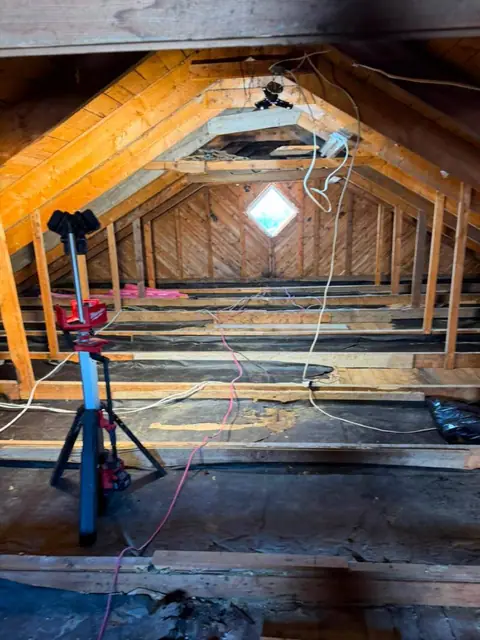 Before
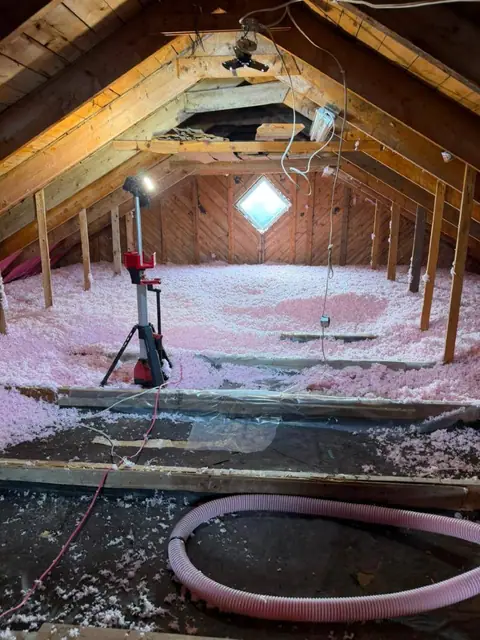 During
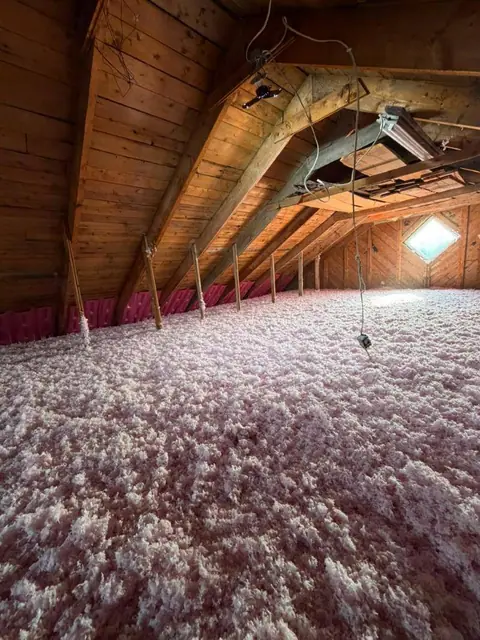 After
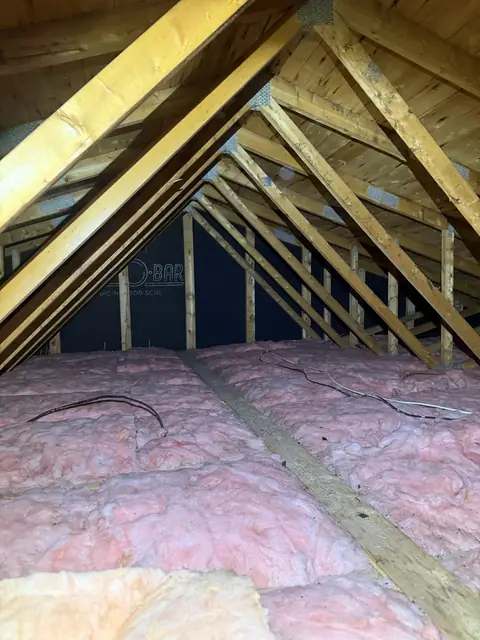 Before
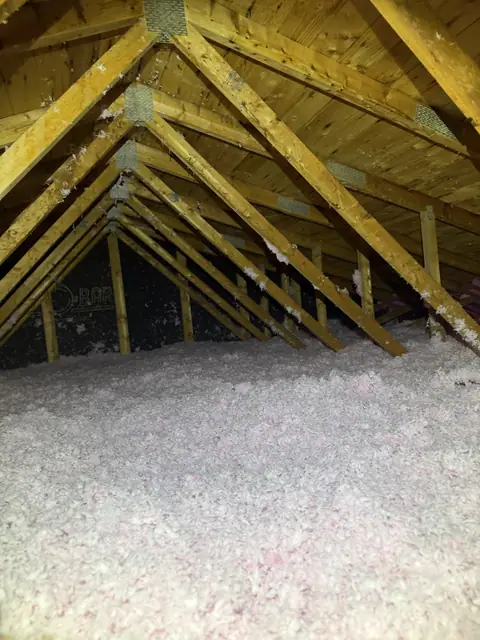 After
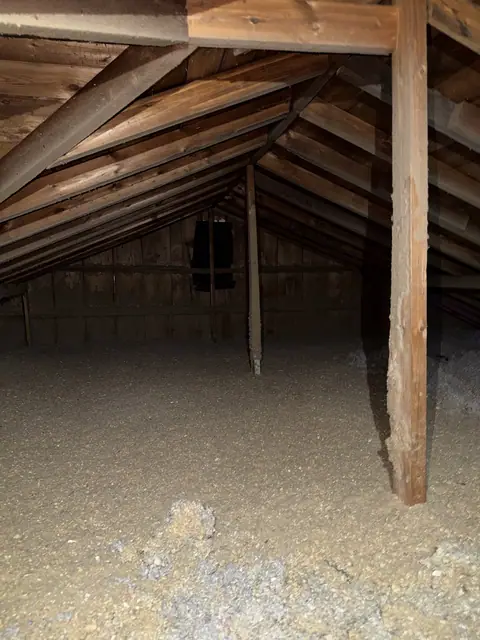 Before
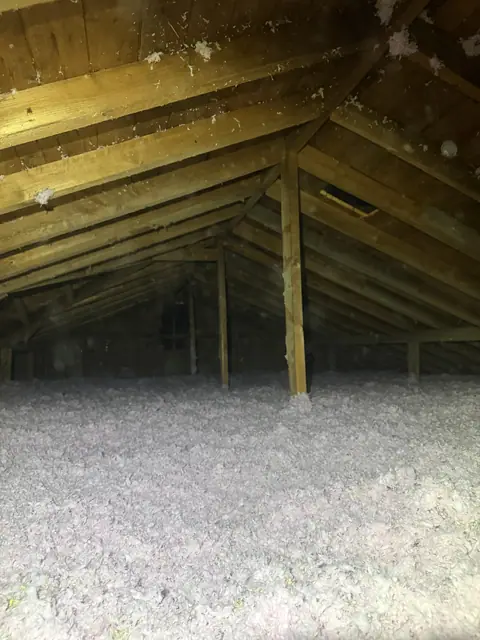 After
How we insulate your attic
- We measure the insulation in place and check the ventilation, the hatch and the condition of the wood.
- We clear the soffits and install baffles to keep an air channel under the roof.
- We seal the air leaks in the ceiling: hatch, light fixtures, wire and pipe openings.
- We attach depth markers to the roof trusses, then blow in the insulation to the planned depth.
- We clean up and give you the before and after photos.
Top-up or full re-insulation?
Your attic is already insulated
If the insulation is dry, clean and free of vermiculite, we blow more on top up to R-60. That's the most common case.
The insulation is wet, packed down or contaminated
We remove it first, fix the cause, then re-insulate. See decontamination.
Why blown-in fibreglass
- It doesn't burn: fibreglass is non-combustible.
- It doesn't rot and doesn't feed mould.
- It settles very little over the years.
- Blown in, it fills the corners and covers the whole attic, with no seams.
R-value, simply
The R-value measures how well insulation resists heat flow. The higher it is, the less heat gets through. LogisVert requires R-50 (RSI 8.8) over the whole attic. We blow in up to R-60 to keep a margin.
To get there with blown-in insulation, you need a thick, even layer everywhere. That's why we check it with depth markers attached to the roof trusses: you can read the depth yourself.
What insulation changes
- Less heat lost through the roof, so less heating to pay for.
- More comfortable rooms upstairs, winter and summer.
- Fewer icicles and ice dams at the edge of the roof.
- Less condensation and frost in the attic, as long as the ventilation keeps up.
LogisVert grant
A house mainly heated with electricity can receive $1,500 if the whole attic is insulated to R-50 and the caulking is done. See the conditions.
Frequently asked questions
How much does attic insulation cost?
The price depends on the area, the insulation already in place, access and the work needed first: ventilation, sealing, removal. We give you a written price after the inspection, which is free.
How long does the work take?
A top-up often takes one day. The exact duration is written in the quote.
Will it make a mess in the house?
We protect the floors and the way to the hatch, and we clean up before we leave.
Can you blow insulation over the old insulation?
Yes, if it's dry, clean and free of vermiculite. If not, we remove it first.
Where is my attic hatch?
Often in the ceiling of a closet or a hallway. Clear the way to it before our visit. If you can't find one, we'll discuss it at the inspection.
Our other services
A free inspection, with photos of your attic
Call us or fill out the form. We'll call you back to book the visit.