
Attic ventilation and soffits
An attic has to stay cold and dry. We clear the soffits and install baffles so air flows from the edge of the roof up to the ridge.
In photos
Jobs done by our team.
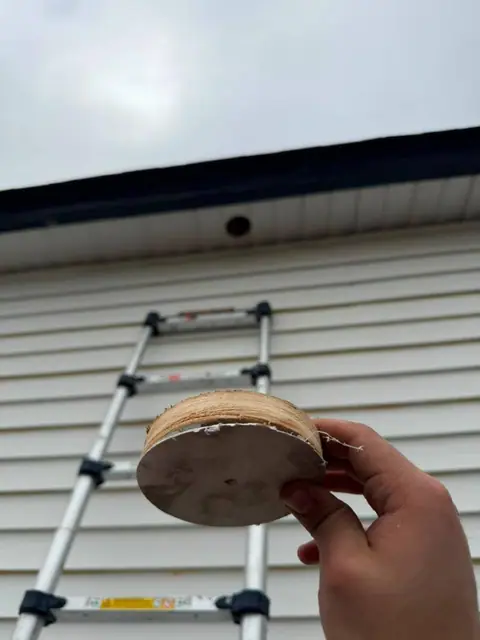 Before
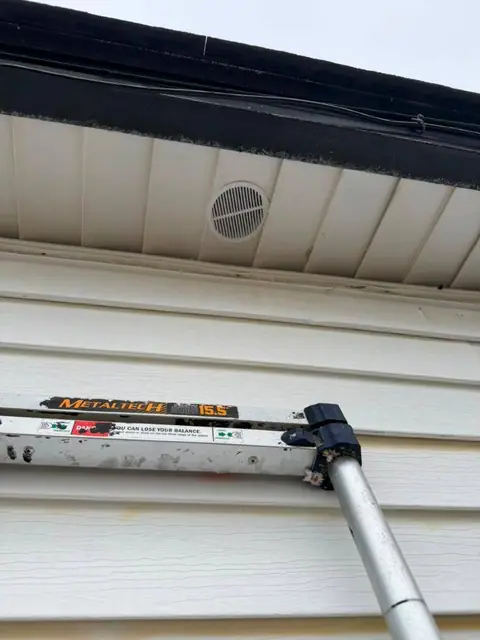 After
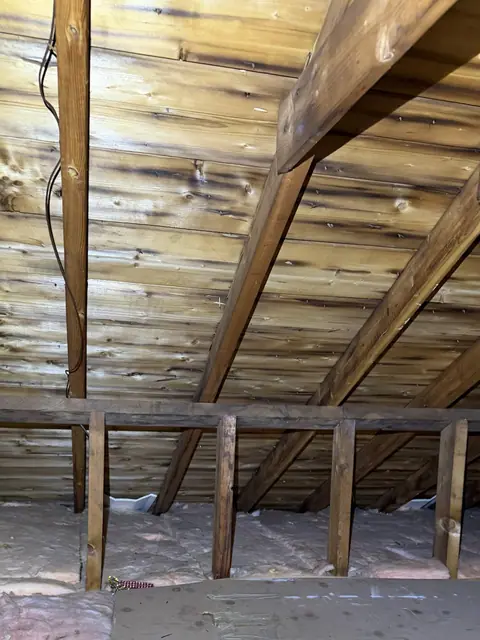 Before
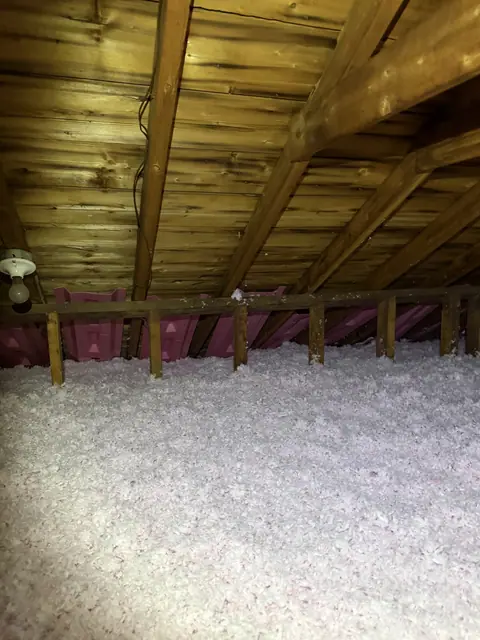 After
How air should flow
Cold air comes in through the soffits, under the roof overhang. It rises under the roof sheathing, above the insulation, and goes out through the roof vents or the ridge. This airflow carries moisture out and keeps the roof cold, which stops the snow from melting from underneath.
What we do
- We check the soffits, the roof vents and the airflow path.
- We clear soffits blocked by insulation or debris.
- We install baffles between the trusses to keep an air channel above the insulation.
- We check that the bathroom fans and the range hood vent outside, not into the attic.
Signs of poor ventilation
- Frost under the roof, or nail tips white with frost in winter.
- Blackened wood or mould stains.
- Icicles and ice dams at the edge of the roof.
- A very hot attic in summer.
Ventilation and insulation go together
When insulation is added, the soffits have to stay open. That's why we install baffles before blowing in the insulation. A top-up without baffles can block the ventilation and cause condensation.
Frequently asked questions
My roof has vents. Is that enough?
Not always. Without air coming in at the soffits, roof vents don't draw well. Both have to work together.
Why is there frost in my attic?
Warm, humid air from the house rises into the attic and freezes against the cold roof. The air leaks have to be sealed and the air has to circulate.
Our other services
A free inspection, with photos of your attic
Call us or fill out the form. We'll call you back to book the visit.